
Texture Matters: How Material Choices Elevate Your Home

A luxury interior isn’t defined by one big statement piece - it’s defined by the details you experience every day. Texture is what makes a space feel layered, considered, and truly bespoke.
Think about the difference between:
a room that looks beautiful in photos, and
a room that feels warm, calm, and refined the moment you walk in.
That difference is often material choice: the balance of smooth and tactile, matte and reflective, soft and structural.
Below are the key texture families that elevate a home - and how to combine them in a way that feels intentional (not busy).

1) The goal: contrast with control

Texture works best when you create contrast, but keep the overall palette cohesive.
A simple rule that works in most high-end interiors:
Choose 1–2 hero textures (the ones you want people to notice)
Support them with 2–3 quieter textures (so the space still feels calm)
2) Wood: warmth, softness, and “human” feel
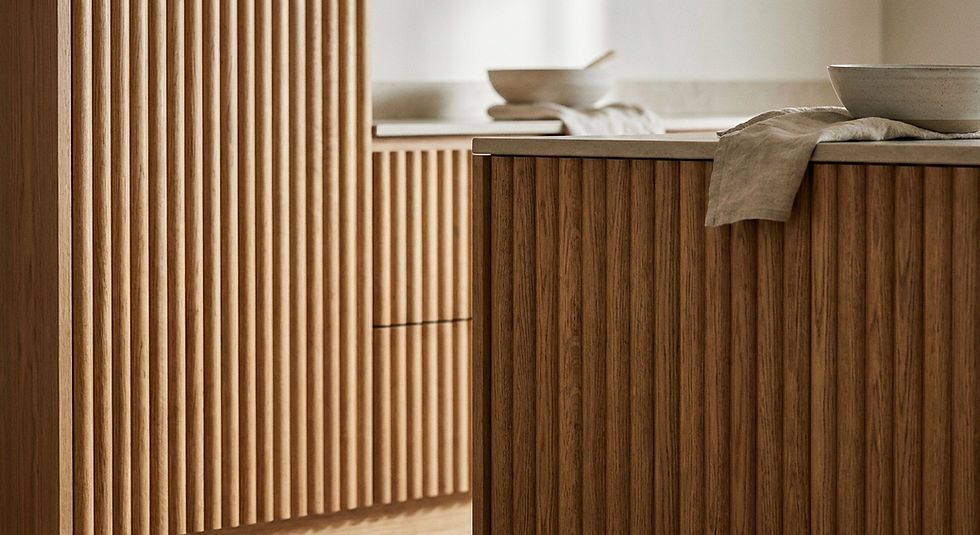
Wood instantly makes a space feel warmer and more liveable - and it isn’t only for traditional interiors.
In contemporary kitchens and joinery, wood works beautifully when used as an accent tone with sharp lines - it’s forgiving, adds warmth, and brings a natural feel.
Where it shines:
Feature tall units or an island panel
Open shelving in a controlled, minimal way
Slatted or ribbed joinery details for subtle depth
3) Stone + mineral surfaces: weight, calm, and permanence

Stone (and stone-look surfaces) bring visual weight and a sense of permanence.
Options that can feel refined:
Honed or leathered finishes for a softer, less “showroom” look
Large-format surfaces with quieter movement if you want a calmer kitchen
Design tip: If your stone has strong veining or movement, keep cabinetry simpler so the space doesn’t become visually noisy.
4) Fabric: the layer that makes luxury feel comfortable
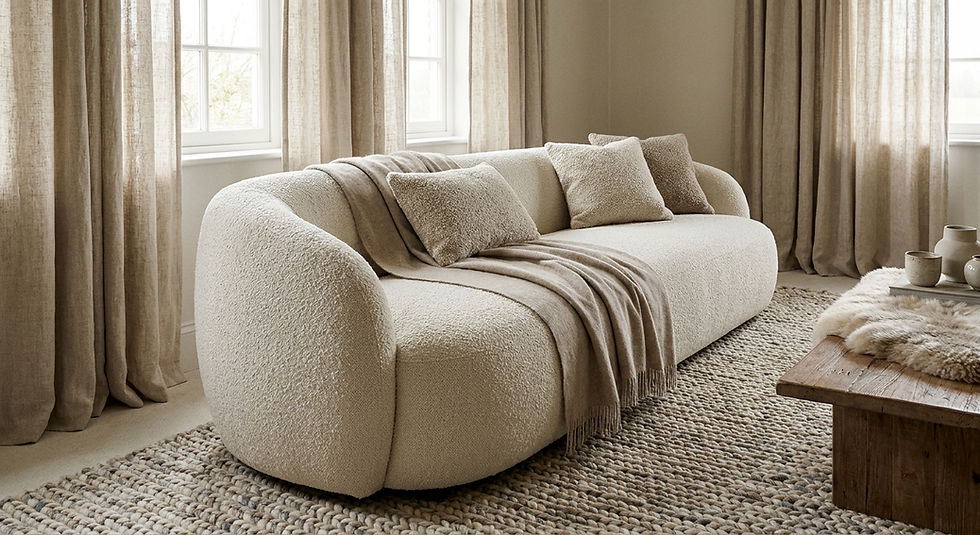
Textiles stop luxury interiors from feeling cold.
High-impact, easy-to-get-right layers:
Linen or wool curtains (soft, matte, timeless)
Textured upholstery (bouclé, velvet, heavy cotton)
A rug with visible weave to soften hard flooring
5) Metal: use it like jewellery (pick a "family" and commit)

Metal is where a space can quickly look expensive - or quickly look confused.
Rather than mixing lots of metals, it usually looks more premium to:
Choose one main metal finish that suits the tone of the room/kitchen
Use that finish consistently across handles, taps, lights, and small details
If you do introduce a second metal, keep it subtle and intentional (for example: one feature light, not every fitting).
6) Glass + mirrors: reflection as texture

Glass isn’t just about “making a room bigger” - it can be a texture in itself.
Ways to make it feel high-end:
Ribbed/fluted glass on doors or partitions
Smoky/bronze tints for depth
Special effect mirrors (like antique-style glass) to add texture and that bougie, layered look
7) The finishing move: matte vs gloss (and why it matters)

A luxury space often has both - but in the right places.
Matte finishes feel calm and modern
Gloss finishes add depth and bounce light
The most premium interiors usually avoid “all gloss” or “all matte”. Instead, they balance the two.
Choosing textures that feel calm and cohesive
Texture is what turns a nice interior into a space that feels designed - warm, layered, and quietly confident.
If you’re planning a kitchen or interior project and want help choosing materials that work together (tone, colour, texture, and finish), Opulenza can guide you through the design and craft the joinery to match.


